


The Good, The Not So Good and The Ugly : FIFA World Cup 2026

After plucking up just enough courage to reflect on this summer's World Cup —courtesy of Enzo Fernández (we'll get to him) and Lautaro Martínez deciding it wasn't coming home, I thought it was time we digest the madness that unfolded across North America.
From Spain's beautiful tiki-taka triumph to hydration breaks and half-time disco shows, separating the magic from the mess might just help us work out whether this year's World Cup was a quality tournament for entertainment, or simply commercial clutter dressed up as one.
The Good
Y Viva España
Although Spain were the bookies' favourites from day dot, they still managed to lift the trophy with elements of flair. For those of you who didn't watch the final, come on really? It wasn't the most thrilling final I must say, but Spain defeated Argentina 1-0 thanks to a Ferran Torres goal in extra time. A completely dominant display (0 shots on target in 120 minutes for Argentina).
The Spanish team played as a collective: with confidence and control nullifying all the other international giants from using their secret weapons (Messi, Mbappé, Cristiano, De Bruyne). Spain's secret weapon was their ability to perform as a team and not rely on a singular outlet. Yamal, Rodri, Fabián Ruiz (hugely underrated), Pedri, Unai Simón (only conceded 1 goal throughout the tournament), these are world-class players who united to win Spain's second Copa del Mundo.
The Underdogs
We all love a great underdog story and this World Cup gave us plenty to choose from. Most notably Cape Verde. Cape Verde or Cabo Verde, a volcanic archipelago off the coast of Senegal in West Africa, the third-smallest nation to ever qualify, remarkably managed to escape group H after draws with Saudi Arabia, Uruguay (two-time World Cup winners by the way) and Spain, the eventual champions. It eventually took the very best from Messi and Co to score after 110 minutes in the round of 32 to send the small nation packing. The standout player being their 40-year-old goalkeeper, Yes, 40. Vozinha caught the media's attention straight away and has now amassed over 29 million Instagram followers, more than Alcaraz and Sinner combined. DR Congo, Morrocco and Curaçao also deserve a mention after their impressive campaigns in which they exited the tournament with grace and pride.
The Not So Good
The "Hydration" Breaks
I think we were all expecting some rise in commercial activity considering the parties involved but I'm not sure we were expecting something quite like this. If us Brits weren't talking about how hot it is outside or how we thought England played last night we were most definitely discussing these hydration breaks. Hydration breaks are practical. They give players a short rest to take on fluids and give the coach 5 minutes to talk tactics, and considering these were implemented in Qatar four years ago due to extreme heat, there is a case to be justified. But, masking the real "advertising break" is where the controversy lies. Using football as a marketing platform, like those gaudy F1 cars, voids the sporting beauty, turning a stadium moment that should belong to the players and fans into just another billboard rotation. But I'm sure we weren't all complaining when it gave us a chance to run to the bar for a fresh round.
So close, yet so familiar
England's best finish since glory in 1966 and it tastes bitter. I don't intend this paragraph to be like a remake of the Titanic film (long and sad) but I can't help but see the similarities between the story and England's campaign. This England side looked unsinkable coming into the tournament, winning 22/22 and conceding 0. Players lighting up their respective leagues, fluid attacking movements, pace in the right areas, experience in the right areas, England were seen as keen contenders. Although Thomas Tuchel and Harry Kane had the experinece to captain the ship past the smaller icebergs (DR Congo, Mexico, Norway) there was no way through Argentina's strength and determination in our semi-final collision. Take nothing away from the players who wouldn't have given up for love nor money; the team should head back to their clubs with pride and with something to prove in 2030.
The proper Ugly
Argentina's Dark Arts
Argentina's road to second place in the World Cup 2026 will be almost as memorable as their triumph in Qatar 2022. Lionel Messi's heroics, impressively gritty last minute comebacks and their almost combat-like aggression in the later stages of the tournament. Their desperate, backs-to-the-wall spirit carried them past Egypt, Switzerland and England, and it was in the match against the Three Lions in which we started to see their "win at all cost mentality" turn into pure combat. The final was also very heated with 45 fouls (25 committed by Argentina), 5 yellow cards, 1 red card. Argentina midfielder, Enzo Fernández being the recipient of la tarjeta roja, seemed in disbelief when the referee looked for his back pocket when the 25 year old barrelled into the challenge like a man possessed. Painful as it is to admit as a Chelsea fan, he had that one coming.
The final whistle should have been the end of the drama. Instead it was the pretty much only getting started, as Molina's punch at Rodri triggered a mass brawl, with Paredes grabbing García by the throat and hauling Gavi to the ground before another Argentinian headed to the changing rooms early. What should have been a champagne moment for Spain instead descended into chaos.
Politics in Sport : a recipe for disaster
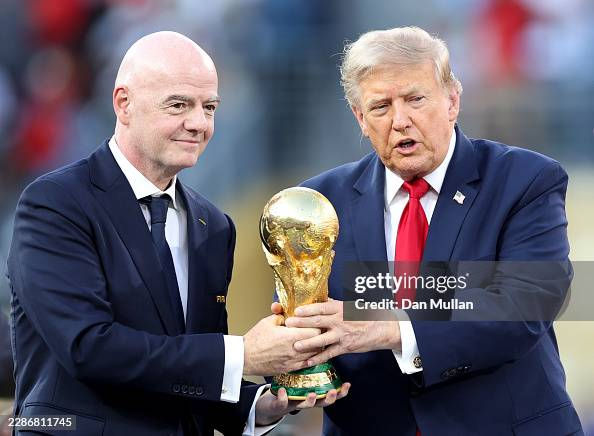
If there was one storyline that threatened to overshadow the football itself, it was politics muscling its way onto the pitch, because nothing says "the world's game" quite like a suspension being magicked away by a phone call from the Oval Office. Folarin Balogun (USA attacker) picked up his red card against Bosnia fair and square - but apparently a strongly worded word from President Trump was enough to make FIFA suddenly rediscover some sympathy for the lad. UEFA officials were left fuming, neutrals were left wondering whether the disciplinary code now comes with a presidential veto, and the rest of us were left with the distinct impression that "due process" at this World Cup was more of a suggestion than a rule.
Argentina then poured fuel on the fire after beating England in the semi-final, when several players unfurled a "Las Malvinas son Argentinas" banner. The revival of the decades-old Falklands dispute on one of football's biggest stages triggered a FIFA investigation into a clear breach of its ban on political messaging. I'm not still salty, I promise.
When politics starts dictating disciplinary rulings, banners, and even who gets a spot on the winners' podium, the sport itself ends up as little more than a supporting act at its own party.


Comments